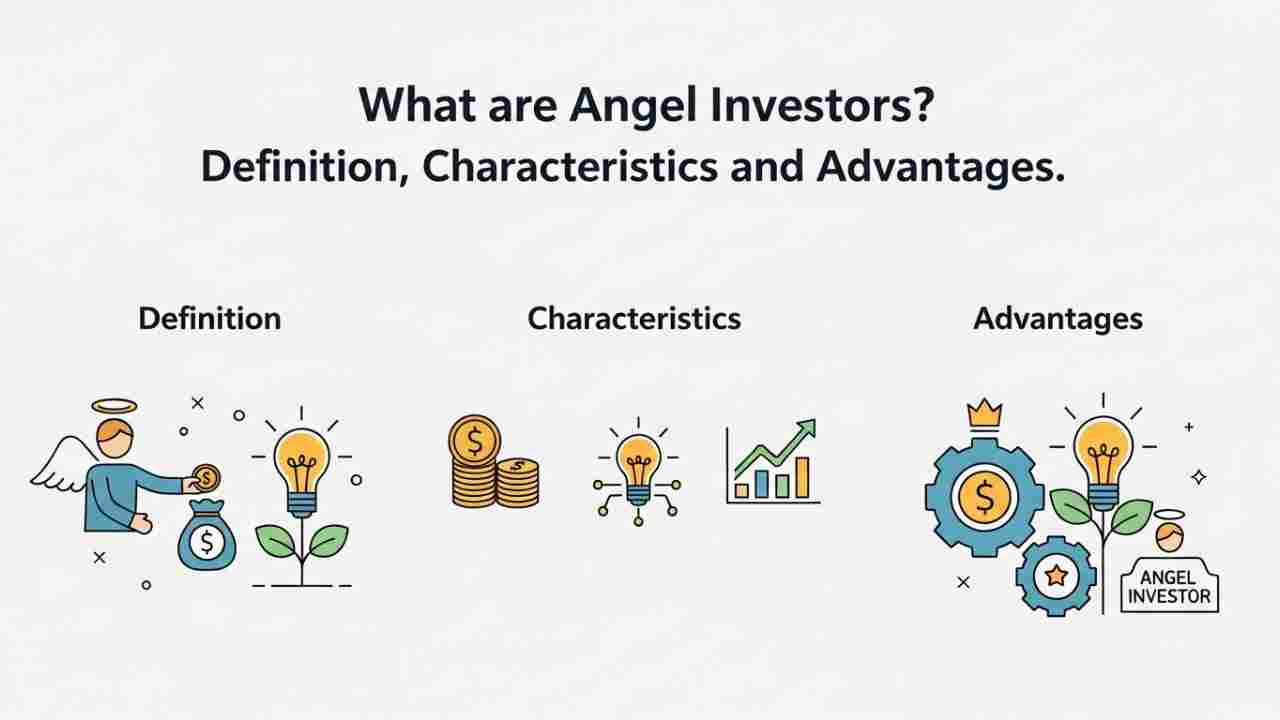
Starting a business is exciting, yet it mostly requires more money than can be handled by the founder themselves. Though some entrepreneurs finance projects from their own savings or borrow, many turn to other sources for help. Angel investors are a significant force in the startup world, as they give early-stage companies the boost required through the provision of money, guidance, and connections. In this blog, we will outline what an angel investor is, their key characteristics, and their relevance to startups.
What is an Angel Investor?
The angel investor is a well-off individual investing one’s own money into an early-stage business or a startup in return for ownership, better known as equity. In contrast, unlike normal banks and other forms of formal lenders, the motive of regular interest and repayment is not of interest to an angel investor. Instead, they are interested in the growth of the company at a fast pace and becoming extremely valuable so that their shares can later be sold to own firms at an increased market price.
Most of them are from successful business and technology careers, among others. By using their private wealth, angel investors support new ventures that could not reach banks and firms in venture capital due to their small or new size.
Key Characteristics of Angel Investors
Angel investors are not just rich people who throw money at startups. They usually have certain traits that make them valuable partners for entrepreneurs:
- Experienced Professionals: Many angel investors are senior executives, CEOs, or successful entrepreneurs who have deep knowledge of running a business.
- Domain Expertise: They often invest in industries they understand well, so they can give useful advice and help the startup avoid common mistakes.
- High Net-Worth Individuals: Angel investors are typically wealthy individuals who can afford to take risks on early-stage companies.
- Risk-Takers: They know that many startups fail, but they are willing to accept this risk in the hope of earning high returns from the few that succeed.
- Long-Term Thinkers: Angel investors usually plan to stay invested for several years, waiting for the startup to grow, get acquired, or go public.
How Does Angel Investing Work?
The idea of “angel investing” comes from the world of theatre, where wealthy individuals used to fund stage productions without any guarantee of profit. These supporters were called “angels” because they took the risk to help the show go on.
In the startup world, angel investing works in a similar way:
- Connecting with Angel Investors
Startups can find angel investors through personal networks, angel investor groups, online platforms, or by reaching out to known entrepreneurs and investors. - Due Diligence
Before investing, the angel investor carefully checks the startup’s business plan, team, product, market potential, and financials. This process helps the investor understand if the business is worth the risk. - Investment Agreement
If the investor is convinced, they draft an investment agreement or term sheet. This document mentions how much money will be invested, how much equity the investor will get, and other terms like governance rights. - Deal Finalisation
Once both sides agree, they sign the legal documents, and the money is transferred. This completes the angel investment and makes the deal official.
Angel Investor vs Venture Capital: What’s the Difference?
Many people confuse angel investors with venture capital (VC) firms. Here’s a simple comparison:
| Feature | Angel Investor | Venture Capital (VC) |
|---|---|---|
| Source of Money | Personal wealth | Pooled money from many investors |
| Stage of Investment | Early stage (idea or seed stage) | Growth or expansion stage |
| Amount Invested | Smaller amounts (e.g., ₹25 lakh – ₹10 crore) | Larger amounts (often crores or more) |
| Role in the Startup | Often acts as a mentor and advisor | Focuses more on scaling and returns |
| Portfolio Focus | Angel investing is a small part of their portfolio | Startups are the main focus of their portfolio |
SEBI Rules for Angel Investors in India
In India, the Securities and Exchange Board of India (SEBI) has certain rules for angel investors and angel funds:
- Angel investors must invest at least ₹25 lakh in a venture capital undertaking.
- The maximum investment in a single startup is capped at ₹10 crore.
- Angel funds (which pool money from investors to fund startups) are classified as Alternative Investment Funds (AIFs).
- SEBI has proposed that only accredited investors should be allowed in angel funds. Accredited investors are those with:
- Annual income of at least ₹2 crore, or
- Net worth of more than ₹5 crore with a minimum annual income of ₹1 crore.
These rules help ensure that only investors who understand the risks are involved in early-stage startup investing.
Advantages of Angel Investors for Startups
Angel investors are extremely helpful for startups, especially in the early days when it’s hard to get funding. Here are some key benefits:
- Early-Stage Funding: Angel investors provide the first round of external money when the company is just an idea or in its early growth phase.
- More Capital in Future: If the startup does well, the same angel investor may invest more money in later rounds.
- Valuable Connections: Angel investors are usually well-connected. They can introduce the startup to customers, partners, and other investors.
- Expert Guidance: They bring years of experience and industry knowledge that can help the startup make better decisions.
- Credibility Boost: Having a known angel investor on board can improve the startup’s reputation and make it easier to attract future investors, clients, and talent.
Risks and Challenges of Angel Investing
While angel investing can be very rewarding, it also comes with risks:
- High Risk of Failure: Many startups fail, so there is a real chance that the entire investment could be lost.
- Hard to Evaluate Startups: Early-stage companies have limited financial history, making it difficult to judge their true potential.
- Tax Implications: Angel investors need to be aware of the tax rules related to capital gains and other aspects of startup investing.
- Loss of Control for Startups: Sometimes, angel investors may ask for a large share of ownership or too much control over business decisions, which can be a challenge for founders.
Final Thoughts
Angel investors are much more than providing money; they also mentor and connect while giving early belief in the vision of the startup. The capturing of an angel investor for entrepreneurs may prove to be a game-changing opportunity, as such investment provides not only capital but also guidance and credibility to their firms. Angel investing can provide high returns to investors on one hand, but they also require thorough research and high tolerance of risk on the other.
Whether one is a founder seeking funding or an investor looking at a possible angel investment, it’s important to understand how things work, what to expect, and how to protect your interests. With the right approach, angel investing can be a powerful tool in building successful businesses in India’s growing startup ecosystem.